

Agility Writer and WordAi solve different problems. Agility Writer creates new, SEO-ready content with research and citations; WordAi rewrites existing copy at very high volume.
Quick verdict
Agility Writer is the better pick for most people who need SEO-ready content fast: writing modes up to 7,000 words, real-time research, competitor analysis, smart outlines, internal linking, and citations, with Bulk Mode up to 200 pieces and Optimize Mode for SERP analysis. It holds a 4.7 out of 5 Trustpilot rating.
WordAi stands out for high-volume rewriting: sentence and phrase rewrites, up to 1,000 variations per article, and a Pass AI Detection mode. The Power Plan supports up to 3 million words a month, plus .zip or .csv bulk uploads and API access on every plan.
At a glance
| Agility Writer | WordAi | |
|---|---|---|
| Best for | Creating new SEO content | Rewriting at very high volume |
| Max length | 7,000 words (Advanced) | Rewrites of your input |
| Research and citations | Live web, citations, Fact Sheets | None (rewrites only) |
| SEO tooling | Optimize Mode, G-Smart, Topical Map, GSC Action Center | Related terms only |
| Templates | Reviews, service pages, YouTube, press releases | None (rewrite-focused) |
| Bulk | Up to 200 posts | Up to 3M words/mo, 1,000 variations |
| Pricing | $1 trial, then $28/mo (rollover) | Power $27/mo annual (3M words), API on all plans |
Who each tool is for
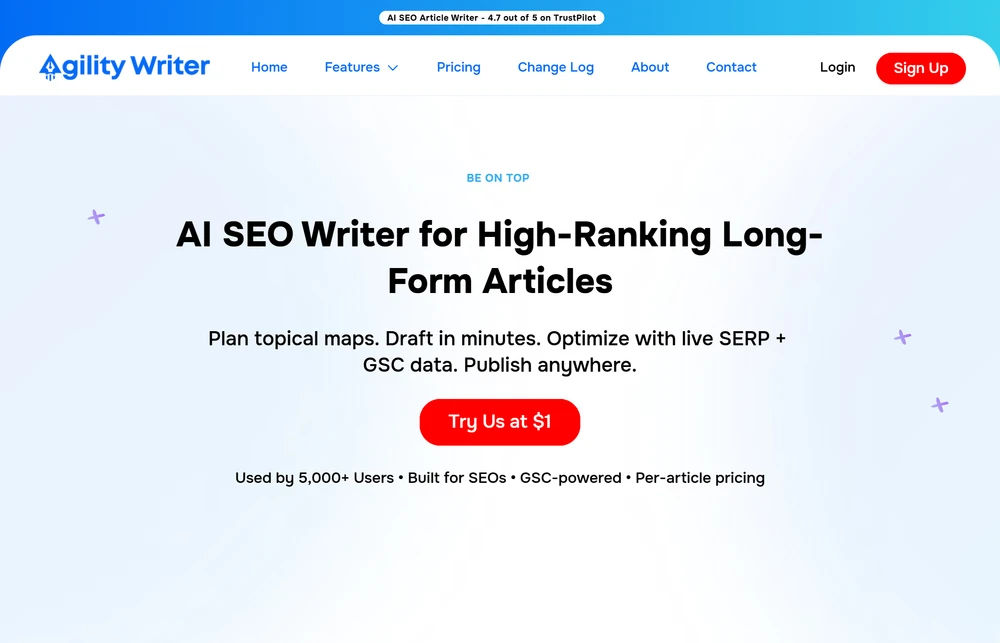
Agility Writer suits SEO specialists and agencies needing long-form copy: articles up to 7,000 words with competitor analysis and real-time research, Bulk Mode for up to 200 pieces with internal links and AI images, NeuronWriter support in Optimize Mode, and the Fact Sheet System plus topical mapping for consistency. Some users report a 340% lift after switching.
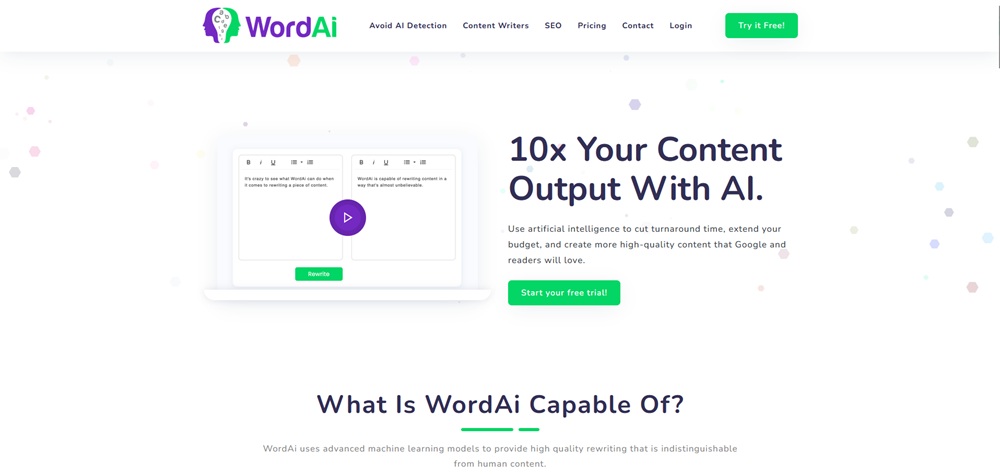
WordAi suits teams whose main job is rewriting large batches, even millions of words a month on the Power Plan: up to 1,000 versions per article, adjustable rewrite strength, .zip or .csv bulk uploads, Copyscape checks, preserved HTML, and API access that connects to Article Forge and WP RSS Aggregator, with white-label options for bigger teams.
How they compare on SEO, research, and modes
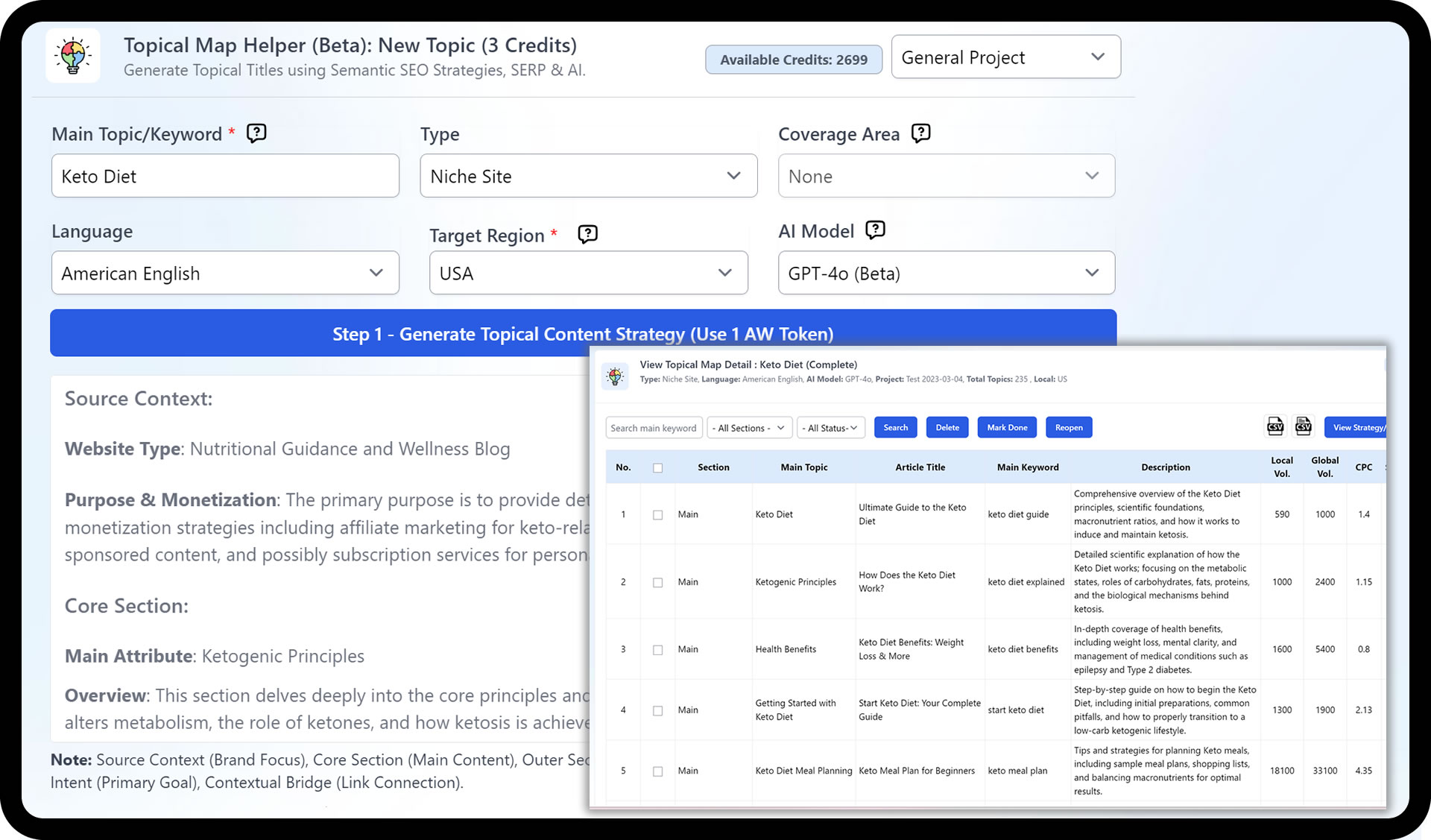
Agility Writer gives hands-on SEO help: Optimize Mode checks top competitors, builds a focused outline, and drafts up to 5,000 words, with internal links, author bios for E-E-A-T, the Article Ideas Generator, the G-Smart Optimizer, the Topical Map Helper, and a GSC Action Center. WordAi takes a simpler approach, using related terms to improve relevance while you set the rewrite level.
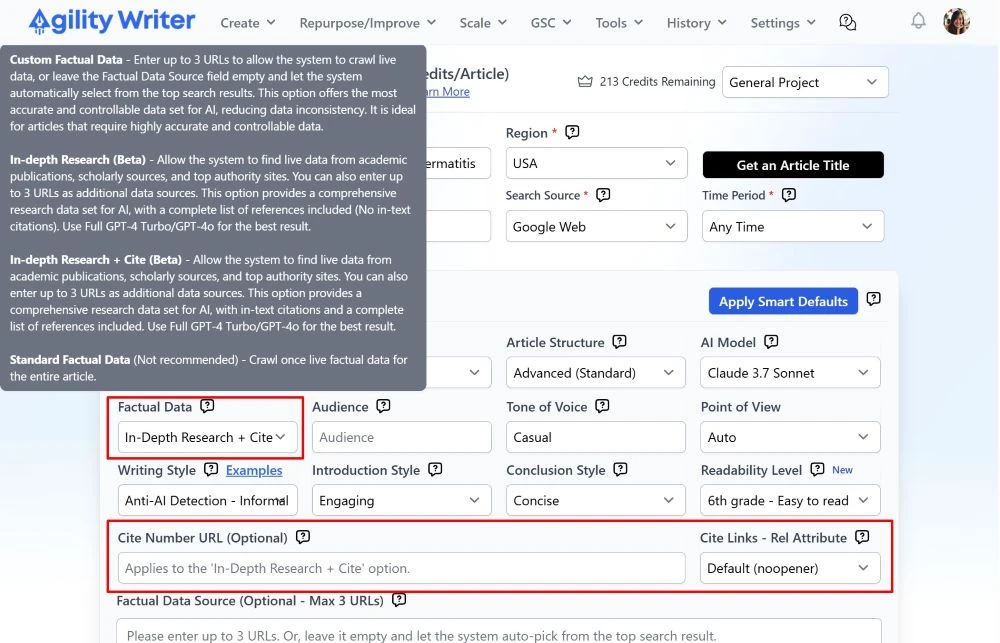
On research, Agility Writer pulls fresh facts during generation, adds citations, supports per-heading Power-Up instructions, and ties facts to references with the Fact Sheet System. WordAi focuses on rewriting what you provide, improving clarity and grammar with NLP but without fetching new information or adding citations. On modes, Agility Writer covers 1-Click, Advanced, reviews, service pages, YouTube-to-Article, Rewrite, Bulk, and press releases; WordAi has no specialized templates.
On integrations, Agility Writer connects NeuronWriter for keyword imports and scoring, a WordPress plugin, Zapier, and API on higher tiers. WordAi includes API on every plan and pairs with Article Forge and WP RSS Aggregator.
Pricing and value
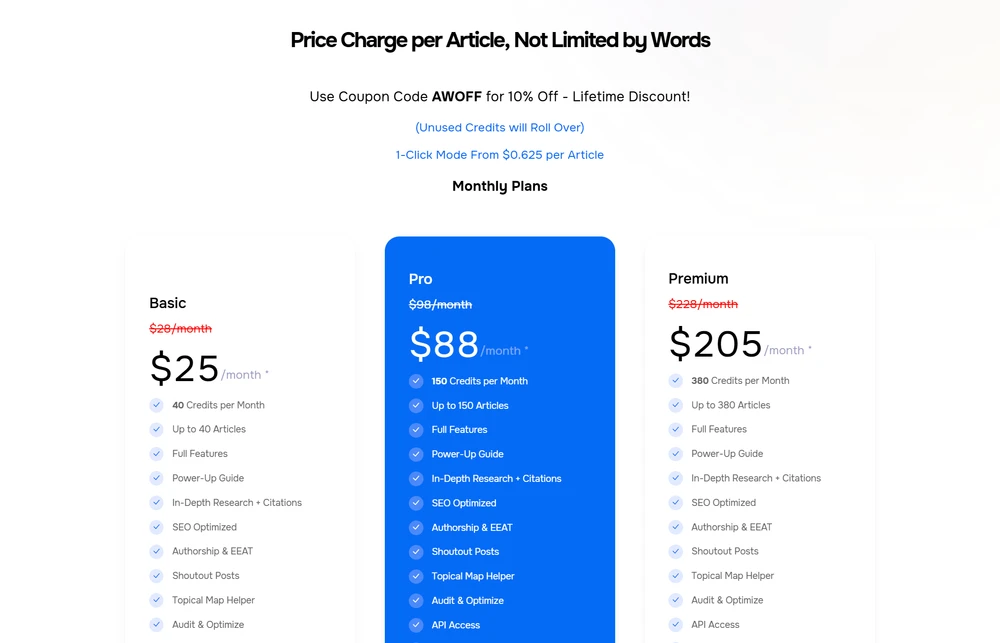
Agility Writer uses credits that roll over: a $1 trial with 5 credits, then Basic at $28 a month (40 credits), Pro at $98 (150 credits), and Premium at $228 (380 credits), with API on higher tiers and annual savings.
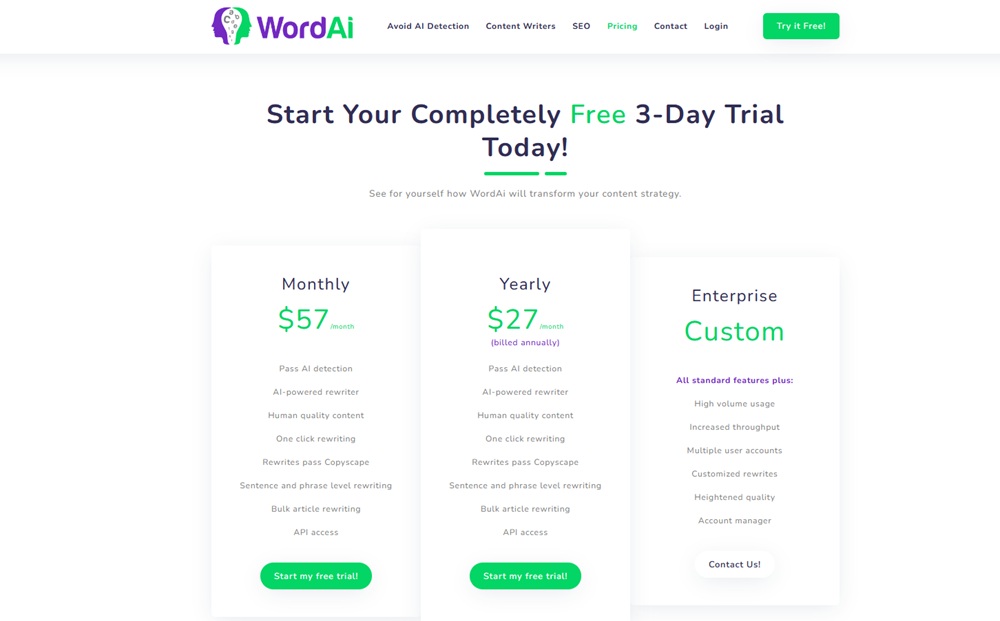
WordAi favors heavy users: on annual billing the Power Plan drops to $27 a month (or $57 monthly) for up to 3,000,000 rewritten words plus Pass AI Detection credits, with API on all plans. Overages cost $2 per 10,000 words with a hard cap, and there is a 3-day trial and a 30-day refund for very light use.
Final recommendation
Choose Agility Writer when keyword research, publishing speed, and credible, sourced content matter, with long articles, smart internal links, real-time scoring, and WordPress and NeuronWriter integration.
Choose WordAi when your job is rewriting existing content at very high volumes and you need variations, API-driven throughput, and simple controls.